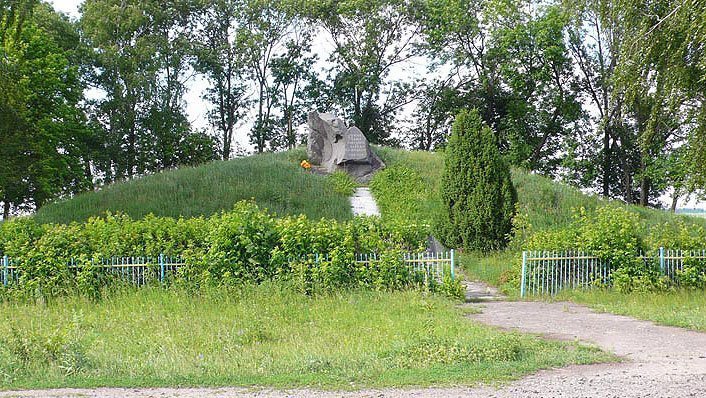
A burial mound with a monolith on top in the shape of an eagle’s wing, inscribed “Eternal glory to the people’s fighters of the Koliivshchyna 1768-1968”, was raised on the burial site of participants in the Haidamaka movement.
The monument was erected in memory of the participants of the Koliivshchyna, who rose against the religious oppression of the Orthodox population by the Polish nobility.
Haidamaka unrest took place as early as the 1730s, when uprisings against social and national oppression flared up in some areas of Right-Bank Ukraine. But the uprising led by Ivan Honta and Maksym Zalizniak was the culminating one. It began in May 1768 near the Motronyn Monastery (near Cherkasy) and quickly spread across Right-Bank Ukraine, reaching Volyn. The uprising was suppressed, and its participants were brutally dealt with, by the troops of the Polish-Lithuanian Commonwealth with the support of the Russian Empress Catherine II.
Two hundred years later, on June 8, 1968, an obelisk of remembrance and grief for all the fallen heroes of the Koliivshchyna was erected at the site of the mass execution.