Korosten district is the Polissia north of the region: ancient Korosten on the granite banks of the Uzh, historic Ovruch with St. Basil’s Church, the Polissia Nature Reserve and the mysterious boulders of the Stone Village.
What to see
Upcoming events
Korosten District — Korosten, Ovruch, the Polissia Nature Reserve and the Stone Village
The Polissia Land of the Drevlians
Korosten district was formed in 2020. It occupies the north of Zhytomyr region — a land of Polissia forests, rivers and marshes. Its administrative center is Korosten; other towns and settlements of the district include Malyn, Ovruch, Olevsk, Irshansk, Luhyny and Narodychi.
Korosten — Ancient Iskorosten
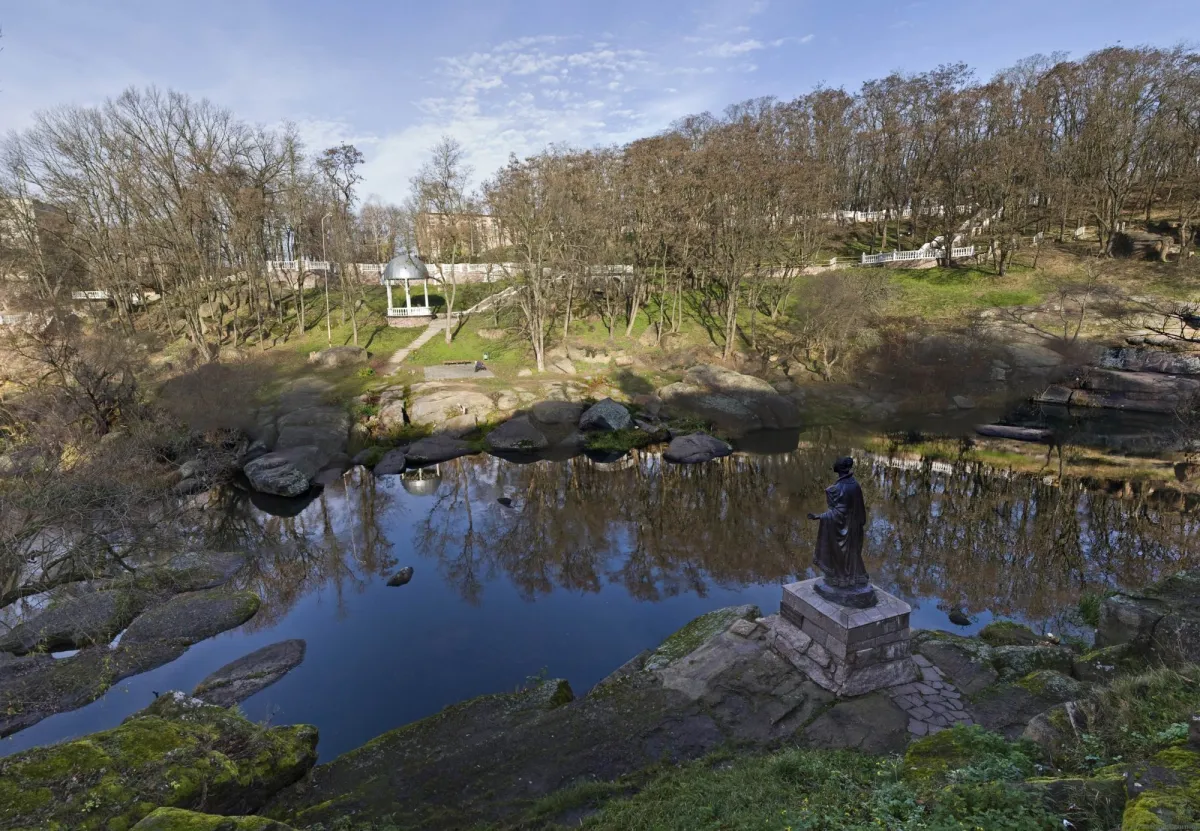
Korosten stands on the Uzh River. This was once Iskorosten, the capital of the Drevlians, which, according to the chronicle, was burned by Princess Olha in 946. In the Drevlianskyi Park on the granite banks of the Uzh stand monuments to the Drevlian Prince Mal and Princess Olha, and the rocks above the river are among the most picturesque spots in the city. Korosten is also a major railway junction, so it is easy to reach by train.
Ovruch and St. Basil’s Church
Ovruch is one of the oldest towns in Polissia. Its highlight is St. Basil’s Church from the late 12th century, a landmark of Kyivan Rus architecture. The church was restored in 1907–1909 to a design by the architect Oleksii Shchusiev.
The Polissia Nature Reserve and the Stone Village
In the north of the district, between Ovruch and Olevsk, lies the Polissia Nature Reserve, established in 1968 — over 20,000 hectares of forests and marshes that preserve the typical nature of Polissia.
Near the village of Rudnia-Zamyslovetska in the Olevsk area is the Stone Village geological reserve: huge granite boulders lie in the middle of the forest, and legends tell of their origin. It is one of the best-known natural wonders of Zhytomyr region.
Read moreHide
Frequently Asked Questions
The Drevlianskyi Park on the granite banks of the Uzh with monuments to Prince Mal and Princess Olha, the rocks above the river and the historic center of the city — the former Iskorosten, capital of the Drevlians.
It is a geological reserve near the village of Rudnia-Zamyslovetska in the Olevsk area, where huge granite boulders lie in the middle of the forest. There are several scientific theories and folk legends about their origin.
Ovruch is an old Polissia town known for St. Basil’s Church from the late 12th century, restored in 1907–1909 to a design by Oleksii Shchusiev.
The reserve lies in the north of Zhytomyr region, in the Ovruch and Olevsk areas, near the border with Belarus. It was established in 1968 to preserve the typical natural landscapes of Polissia.
Korosten is a major railway junction with connections to Kyiv, Zhytomyr and other cities; check the current train timetable on the Ukrzaliznytsia website. Intercity buses also run to the city.