A 68-kg Topaz and the Stones of the Zhytomyr Region: Why a Unique Collection Was Assembled in Khoroshiv
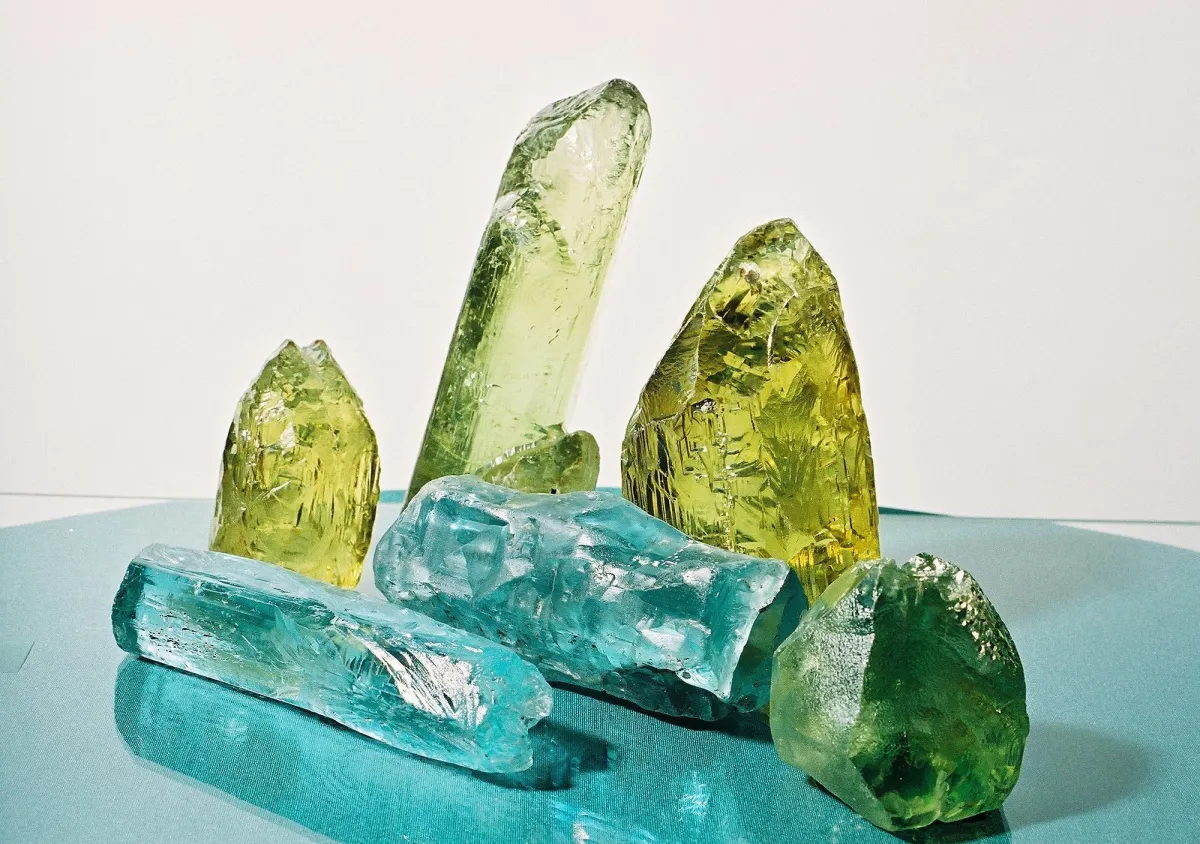
Source: Zhytomyr Online
In 1952, a topaz crystal weighing 68 kilograms was extracted at the Volyn deposit in the Zhytomyr region. And this is only one of the stone giants this part of the Zhytomyr region has produced.
The 68-kilogram crystal itself is not in a display case of the Khoroshiv museum today — after it was found, it was sent to the Earth Science Museum of Moscow University. But the story of this topaz explains well why one of Ukraine’s most famous mineral collections arose in Khoroshiv.
The official website of the Museum of Precious and Decorative Stones states that the 68-kilogram topaz was third by weight among the especially large finds of that period. In 1964, a crystal weighing 117 kg and 82 cm tall was extracted here.
Why such stones are found near Khoroshiv
The main reason is the Volyn deposit of chamber pegmatites. It is the source of the large crystals of topaz, beryl, aquamarine, quartz, morion and other minerals for which this area of the Zhytomyr region became famous.
In the natural cavities of pegmatites, crystals could grow to unusual sizes. That is why geologists found here not only small specimens suitable for cutting, but also true giants weighing tens and even hundreds of kilograms.
This story continues in our time. In 2025, Zhytomyr Online reported on a natural topaz weighing 205 kilograms, extracted in Khoroshiv and entered in the National Register of Records of Ukraine. It was found at a depth of 49 meters.
The museum did not begin as a tourist idea
The collection in Khoroshiv arose directly thanks to the work of geologists. After World War II, exploration and mining of piezoelectric quartz, which had strategic importance, resumed here. Along with the industrial work, specimens of minerals and rocks accumulated.
As the museum’s own history tells, at first the collection did not even have a separate room: specimens were kept in boxes and safes of the geologists of the Volyn expedition.
In 1951, a mineralogical museum was created on the basis of specimens collected by Volodymyr Klochkov and Oleksandr Salmanin. In 1958 the collection was registered as a mineralogical museum on a public basis.
The more the deposit was studied and developed, the more exhibits there were. Geologists also brought stones to Khoroshiv from other deposits in Ukraine and around the world.
A 361-kg morion and a beryl of almost 67 kg
The 68-kilogram topaz is far from the only impressive size in this story. The museum’s exhibition includes a druse of black quartz — morion — weighing 361 kg.
Also kept here is a large beryl crystal 135 cm long and weighing 66.6 kg. And among topazes, the museum has, in particular, a pale blue crystal weighing 28.52 kg.
Nearby you can see green beryls, aquamarines, rock crystal, smoky quartz, black morion, citrines, amethysts and fluorites. There are pink, blue and polychrome topazes from the collection.
Some crystals even got names of their own
Particularly valuable exhibits were given names of their own. Among the topazes are “Academician Oleksandr Fersman,” “Dzhereltse” (Little Spring), “Kazka” (Fairy Tale) and “Golden Polissia.”
Beryls also have names of their own — “Academician Yevhen Lazarenko” and “Apostles Peter and Paul.” Six such specimens have been entered in the state register as unique stones.
From a geologists’ room to a national treasure
In 1992 the collection was moved to a specially renovated two-story building in Khoroshiv, where the museum is located to this day. Since 1996 it has had its current name — the Museum of Precious and Decorative Stones.
In 2001 the institution was granted the status of a scientific site constituting a national heritage of Ukraine.
More articles