Ovruch and Polissia: St. Basil's Church, the ridge and protected forests
The north of the Zhytomyr region is true Polissia: pine forests, bogs, quiet villages with wooden houses and old traditions. Its main town is Ovruch, known since the days of Kyivan Rus.
St. Basil’s Church
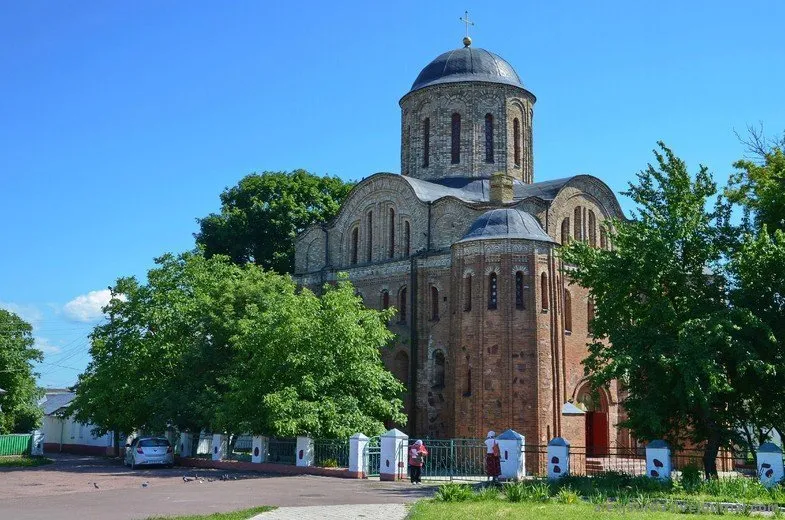
The symbol of Ovruch is St. Basil’s Cathedral. The masonry church was built in the late 12th century under Prince Riuryk Rostyslavych; in 1321 it was destroyed when Lithuanian Grand Duke Gediminas besieged the town. In 1907–1909, the church was rebuilt to a design by architect Oleksii Shchusev, preserving old sections of its walls. Today it is one of the best-known princely-era landmarks in the Zhytomyr region. The town also has a modern place of worship, the Transfiguration Cathedral, built in the early 2000s.
Museum and crafts
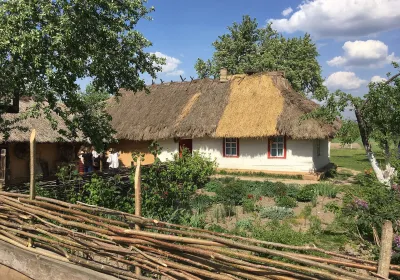
The Museum of Ovruch History tells the story of the area from ancient times to the present, with archaeological finds, Cossack weapons, Polissian ethnography and exhibits on the 20th century. The Ovruch Small Academy of Folk Arts and Crafts keeps Polissian crafts alive, including straw art and decorative painting. To feel the atmosphere of a Polissian village, visit the folk house in Stuhivshchyna, an old cottage with embroidered towels, icons and household items.
The Slovechno-Ovruch Ridge
Near Ovruch, the Slovechno-Ovruch Ridge rises above the Polissian plains, a chain of hills about 60 kilometers long. Ancient quartzites and pink pyrophyllite slate come to the surface here. As early as Kyivan Rus, Ovruch slate was used to make spindle whorls that traveled far beyond the region.
Protected forests and the Stone Village
The Polissia Nature Reserve was created in 1968 to protect the pine forests and sphagnum bogs typical of Polissia. It covers more than 20,000 hectares, and its headquarters is in the village of Selezivka. Farther west, near the village of Rudnia-Zamyslovytska, lies the Stone Village, a cluster of huge granite boulders in the forest that has inspired many legends.
Tip: the north of the Zhytomyr region borders Belarus, so before visiting the reserve or the border forests, check whether access is open and what restrictions apply. For more places in the area, see the Korosten District page.