“KOROLOV(O₂).UA. The Formula of Indomitability”: In Zhytomyr, the Concept of a Play About the Ukrainian Genius of Space Was Presented
Source: Zhytomyr Journal
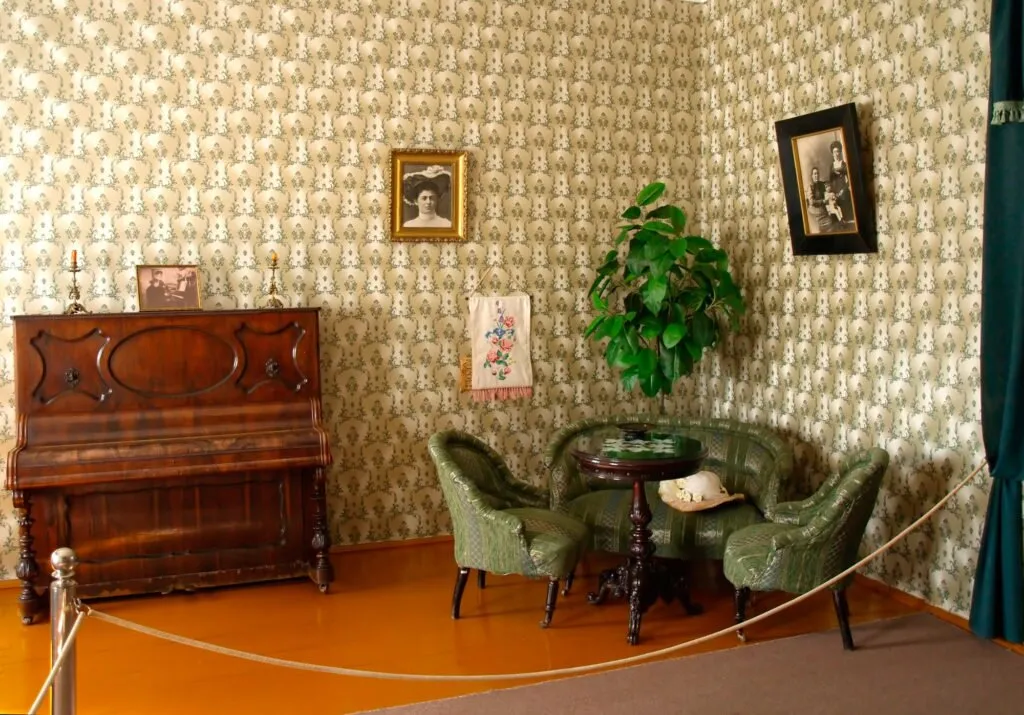
At the Serhii Korolov National Museum of Cosmonautics, the concept of a project was presented: the performative documentary play “KOROLOV(O₂).UA. The Formula of Indomitability.” The production of the Ivan Kocherha Zhytomyr Academic Ukrainian Music and Drama Theater won the final pitching of the President of Ukraine’s state initiative “Tysiachovesna” among 2,634 applications and received funding.
The project’s main message is the decolonization of historical memory and the affirmation of Serhii Korolov as a Ukrainian whose dream overcame the Soviet system of terror.
“We want to show Korolov not just as a ‘Soviet designer’ but as a Ukrainian whose dream, intellect and inner freedom proved stronger than the repressive system. We are not creating a monument. We want to see behind the famous surname a living person: a boy, a son, a young man in love, a prisoner, a designer and a dreamer,” said the project’s author, the theater’s chief director Petro Avramenko.
The city for the start was chosen for a reason: Korolov was born here, the original documents about his birth are kept in the regional archive, and the city has the only such museum of cosmonautics. The play was preceded by research: the authors worked with archives and made the films “In the Footsteps” and “Unbroken. Life on the Edge.”
“This is the first play in independent Ukraine about Serhii Pavlovych Korolov. Hardly anyone has staged plays about his personality at all, and there are no decent feature films either. That is why we took up this figure: we are from Zhytomyr, and he was born here. These films became a starting point for thinking about and realizing the future play,” Avramenko explained.
The partners in the preparation are the State Archive of Zhytomyr Region, the American House at the U.S. Embassy in Ukraine, the International Astronautical Federation, the S. P. Korolov Zhytomyr Military Institute and the Zhytomyr Polytechnic State University.
The play’s metaphor is oxygen: from a newborn’s first breath to a rocket launch and the last minutes of life. Its framework will be a countdown (“10, 9, 8…”), where every second opens a portal in time and space:
“Why O₂? Because it is oxygen. It is the oxygen at birth, when we are born; oxygen when we create something; the oxygen of freedom; the oxygen of the flight of our imagination; the oxygen that a regime or some system cuts off for us; and oxygen as an element during a rocket launch; and oxygen in the last days of Serhii Pavlovych Korolov. There will be no linearity in the plot. Korolov is in a borderline state between life and death, so he sees the past and the future. He will lie on his bed under an oxygen cylinder, and the countdown will go: ten, nine, eight and so on. There will be ten portals. He will meet himself as a child, see the American Moon landing, see himself in the Gulag, see Ukraine today… And it is precisely such flights that will keep the audience in constant tension, showing the extraordinary inner strength of this man.”
In the play, the Soviet system will appear faceless, in the image of the “Alien” monster, locomotive furnaces and a telegraph pole informer collecting denunciations. The designer carried his “inner spacesuit” through the camps of Kolyma.
The play’s main emphasis is Korolov’s Ukrainian identity. He was shaped as a person by Zhytomyr, Nizhyn, Kyiv and Odesa:
“Korolov is a Ukrainian. How could a person who lived a huge part of his life in Ukraine not absorb our folklore, our color, our culture, our song? Behind the launch of the first artificial Earth satellite stood a Ukrainian, Serhii Korolov. The first Ukrainian to fly into space was Pavlo Popovych. And that was when a Ukrainian song was first heard in outer space! Korolov personally asked him to sing, and there is a recording where Popovych sings in orbit ‘I look at the sky and think my thoughts.’ But when you analyze this song further, he is singing that he is an orphan, abandoned by the very authorities he worked for. This is an extremely significant image for our production.”
The voice of memory on stage will be the folk amateur folklore group “Bovsuniv Grannies.” The Zhytomyr ensembles “Oreia,” “Rodoslav” and “Lionok” will also join.
The play will combine drama, the movement of ballet studios, live music and digital technology. A transformer set design is being developed by artist Bohdan Polishchuk: the space will change with the help of three towers, from a Gulag cell to a design bureau and a launch pad.
“We are ordering 3D fans that will draw in space Korolov’s very hands… They will draw Korolov’s thoughts, the way these blueprints were born in his imagination, in his head,” the director said.
The script is being written by Lviv playwright and Doctor of Philosophy Andrii Bondarenko. Local authors are being brought in for the music, and negotiations are under way with pianist and composer Yevhen Khmara. According to Avramenko, once the playwright took on the text, it became clear that the project was going beyond its initial scope:
“We realized it had to be something much larger in scale. So we need to bring in actors from other cities, more performers and modern technology. The set design will simultaneously expand into the vast expanse of space and shrink to the cell into which he was thrown.”
During a panel discussion on culture and business, entrepreneur Matvii Khrenov said that de-occupying Korolov’s legacy is a defense of national interests:
“Is culture important during a war? Culture during a war probably becomes even more important than before the war. I will quote Churchill: when it was proposed to cut the culture budget, he said, ‘Then what are we fighting for?’ We lose too much and give too much to the empire. Who is he, Korolov, Soviet or Ukrainian? There is no discussion here: he was a Ukrainian, but he worked in an empire. And to give them Korolov would be a big mistake. Not many Ukrainian surnames are widely known in the world… And Korolov is precisely one of those people who are very well known abroad. Books should be written about him, plays should be staged, films should be made, because the modern world learns about us only through such big products. Sorry, but suffering no longer sells. We need to make an interesting modern product from such things, and then interest in Ukraine will be much greater.”
In response to Khrenov’s remark that the world often learns about Ukraine through big media products (such as the game S.T.A.L.K.E.R.), the creative team said they plan to build an ecosystem around the play: intellectual quests, mobile apps, and possibly a computer game.
The project’s administrator Olha said the team wants the project to last and be noticeable in the world:
“We want this play to be documented by archives, with the involvement of young people. We will have an inclusive play, it will be recorded and we will share it with the whole world. This is a question much bigger than we are: it is our culture, it is our right, it is our people.”
The recording of the play is planned to be subtitled in English, to have sign-language interpretation and to be shown at theaters in Ukraine and abroad. The team wants to show that humanity’s path to the stars began with a Ukrainian dream.


More articles